03 — Grey Box
Blockout
Levels built in plain geometry so the shape can be judged before anything is made expensive.
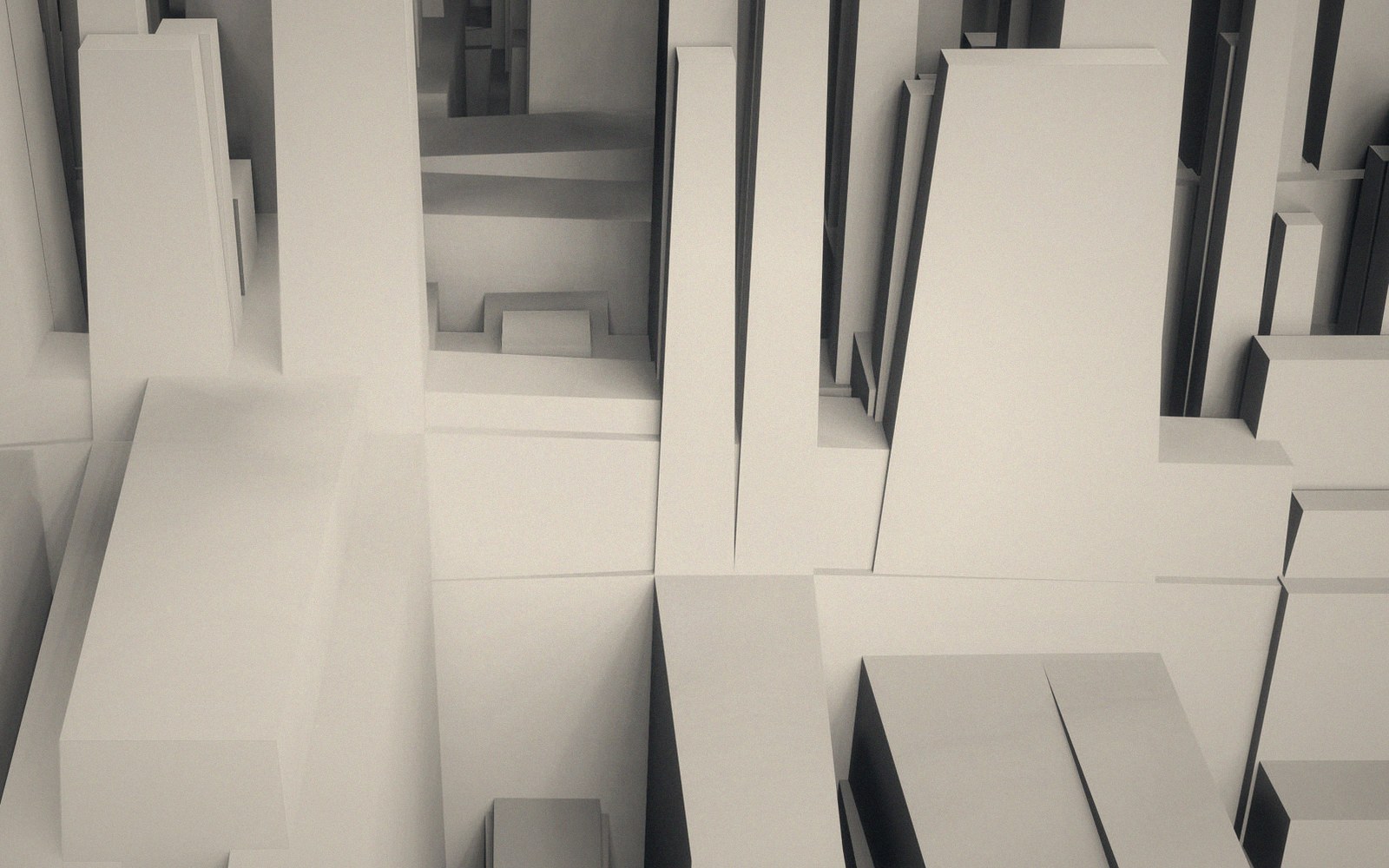
Plain geometry, judged while changing it is still free.
Photo: Steve A Johnson / Pexels
Plain geometry as a design instrument
A blockout — sometimes called a greybox, a whitebox, or simply a proxy level — is a version of a space built entirely from untextured primitive shapes: boxes, ramps, cylinders, planes. No art, no lighting rigs, no foliage, no props. Just the volume, the traversal paths, and the sightlines, assembled quickly enough that nothing hurts to change.
The core logic is economic. Every hour a team spends building a finished asset is an hour it cannot recover if the design turns out to be wrong. A blockout defers that expenditure to the moment when the design has actually been tested. A corridor that kills the pacing costs nothing to widen when it is made of four grey boxes; once it has brick textures, trim meshes, hero props and hand-placed decals baked over three weeks, widening it is a project in itself. The blockout is where you find out the corridor is wrong.
Production teams use slightly different vocabularies. Some studios call the first rough pass a blockout and a later, cleaner version a greybox; others use both words interchangeably. Some pipelines introduce a whitebox phase — higher fidelity geometry, correct collision, placeholder lighting — between the raw blockout and the first art pass. The naming matters less than the principle: at each stage, the geometry is cheap, the feedback is real, and nothing commits the team to a direction before the direction is proven. Level plans drawn on paper precede even the blockout; the blockout is where the plan meets a player's body for the first time.
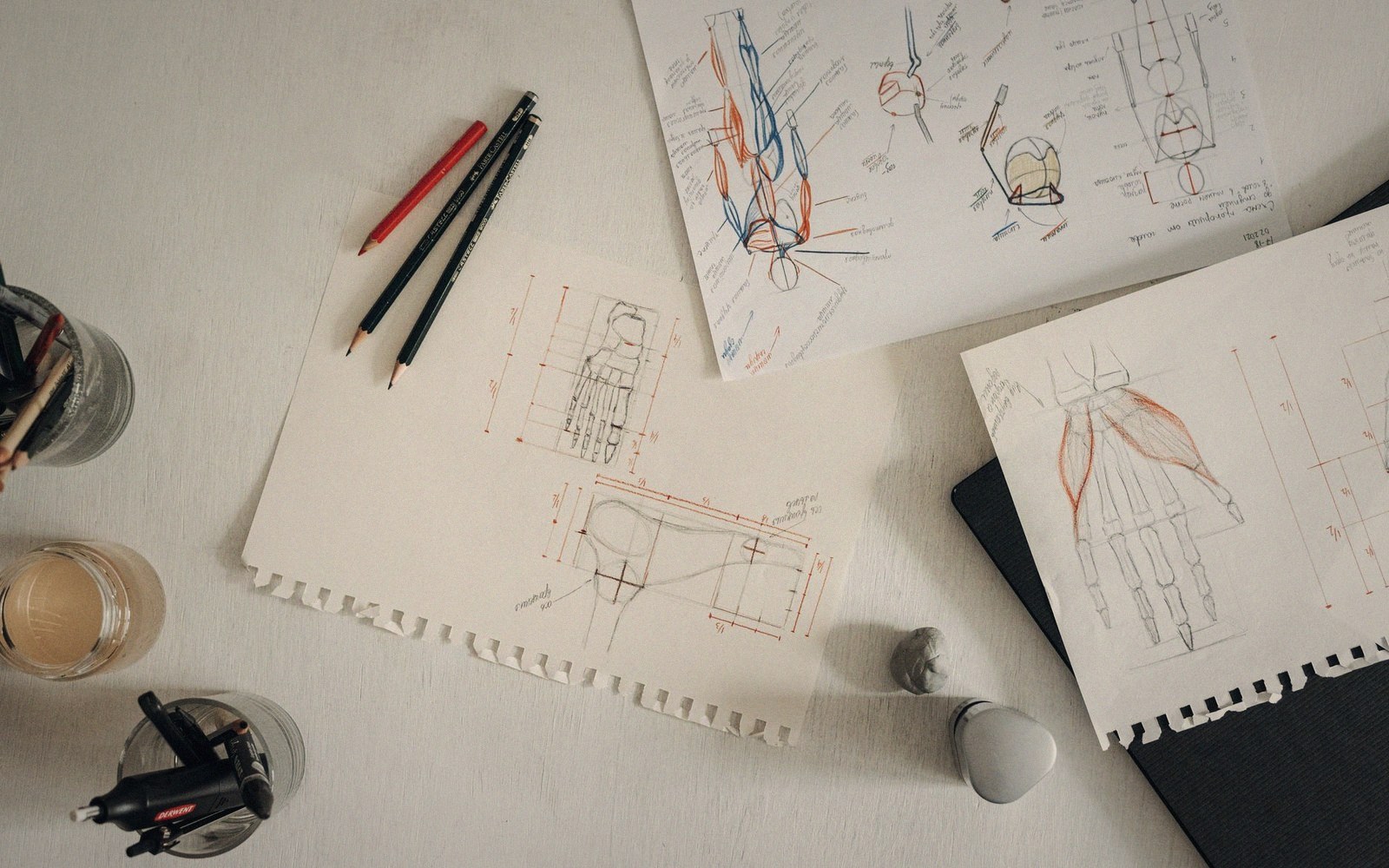
Plans are marked in pen because the argument moves faster than the tool does. Moving a wall on paper is free.
Photo: Anete Lusina / Pexels
What a blockout has to get right
A blockout only works if it is played at the intended scale. This sounds obvious and is routinely ignored. Designers working in engine editors frequently build spaces that feel correct in an orthographic viewport and are revealed, on first playthrough, to be either a vast wasteland of dead space or a claustrophobic maze where a player cannot turn around. Scale discipline — establishing a reference unit from the start, usually tied to the player character's capsule height and movement speed — is what separates a blockout that teaches you something from one that flatters a screenshot.
The blocking also needs to represent real gameplay intent, not just the narrative of a space. A room described in a level plan as "ambush point" must be built so that the ambush is actually testable: enemies need positions, the player needs routes in and out, cover geometry needs to exist at the right height. A blockout of an ambush room that is just a box with a door tells you almost nothing. A blockout with rough cover angles, two entry points and a sightline problem you can demonstrate to a designer in real time tells you something that will survive into the shipped level.
A blockout defers that expenditure to the moment when the design has actually been tested.
Collision fidelity is a recurring issue. Many engines let designers block out quickly using non-collidable meshes, and then forget to add collision volumes. A playtest on geometry the player clips through is worse than no playtest: it generates confidence the design has not earned. Correct, if rough, collision should be a gate before any blockout goes to a playtest session.
Lighting in a blockout is typically flat — a neutral ambient fill that lets the team read shapes without committing to a mood. This is deliberate. The decisions about light as a budget come later, when the geometry is stable. Introducing atmospheric lighting too early creates attachment to a mood that may not survive the structural edits the blockout is supposed to produce.

A blockout on three monitors. At this stage the shape of the level is the only thing under discussion.
Photo: cottonbro studio / Pexels
The end condition for a blockout phase is not a date; it is a set of answers. Can a player navigate the space without instruction? Do the engagement distances match the game's weapon ranges? Does the moment-to-moment pacing feel correct? When the team can say yes to those questions and back it up with playtest footage, the blockout has done its job. Committing to art before those answers exist is the single most reliable way to turn a level into an expensive mistake.