04 — The Asset
Budgets per asset
Triangle counts, texture memory and material slots, agreed up front and defended.

A mesh seen the way the renderer sees it: batches and counts, not silhouettes.
Photo: Marek Piwnicki / Pexels
The numbers that hold everything together
Every asset that ships was made to a spec somebody wrote down — or should have been.
A triangle budget is not a technical constraint handed down by the engine; it is a production decision made early in the project, when a technical artist or lead looks at the target frame time, counts the expected number of entities on screen simultaneously, and works backward to what any one of them can cost. That math produces a number — say, eight thousand triangles for a hero character, fifteen hundred for a background prop — and those numbers then become the agreement that lets art and engineering coexist without constant negotiation.
The same logic extends to textures. A texture budget is usually expressed in memory: so many megabytes per character, so many for an environment tile set, with a hard ceiling for the total resident in memory at any moment. The platform's available VRAM is the outer wall, and the level design dictates how many assets must fit inside it at once. Work that number out wrong and you do not discover it in a texture package review — you discover it when the build crashes on the target hardware three weeks before cert. Material slots are smaller but equally real: each unique material is a draw call, and draw calls are not free, so limits on how many materials a single mesh can carry are set for the same reason triangle limits are.
None of this is useful unless it is written down and agreed before production starts. The usual failure mode is not that the numbers are wrong — they can always be revised — but that nobody wrote them down at all, and every department made plausible-sounding assumptions that happened not to match. Concept approved something with fifteen layers of detail. Modelling hit the triangle count from a game two generations older. Rigging added bones until the character moved correctly. By the time integration tests it, the asset costs three times what the frame can afford, and the question of whose fault it is does not get the frame time back.
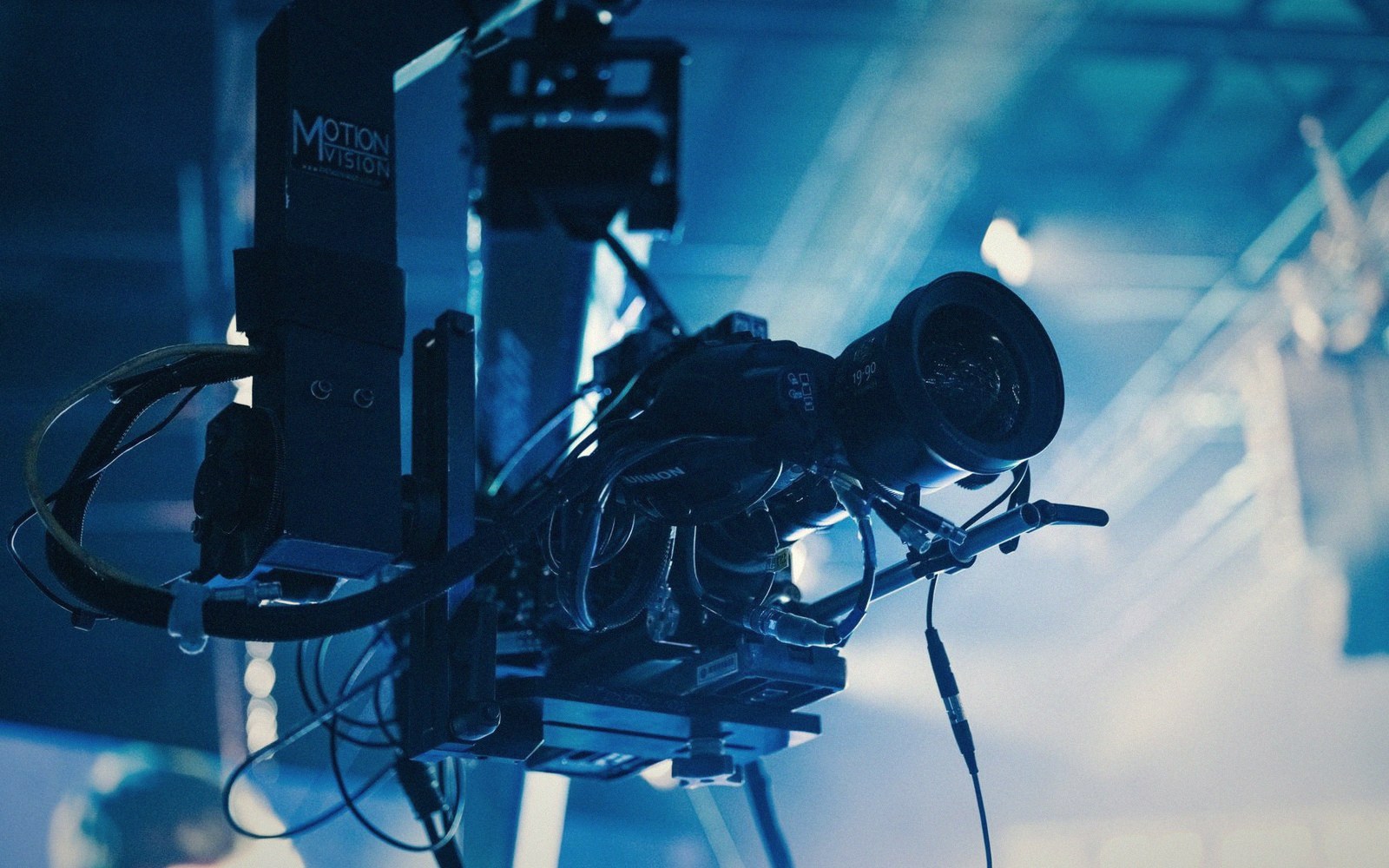
Floor marks and camera rig. The stage day is scheduled months before the animations are needed.
Photo: Bruno Massao / Pexels
The discipline of per-asset budgets is inseparable from how a complete pipeline behaves under production pressure. When limits are encoded in the pipeline itself — a validation step that flags meshes over budget before they are checked in — the conversation moves upstream, where changing the asset is cheap. When limits live only in a spreadsheet that nobody opens, the conversation happens at integration, where changing the asset means re-exporting, re-rigging, re-testing and re-reviewing.
Material budgets deserve particular attention because they tend to expand in ways that are individually reasonable and collectively catastrophic. A modeller adds a second material to get a better edge detail. A texture artist splits a UV set because it read poorly. Neither decision is wrong on its own; together, multiplied across two hundred environment assets, they double the draw call count on a scene that was already heavy. The rule — one material per prop unless the design explicitly calls for more — sounds arbitrary until you are profiling a scene and watching every added draw call shave milliseconds off the frame budget.
Work that number out wrong and you do not discover it in a texture package review — you discover it when the build crashes on the target hardware three weeks before cert.
Revising a budget mid-production is normal. Scope changes, the engine moves, you learn what the camera actually sees. What separates studios that manage it from studios that do not is whether the revision is made deliberately — announced, documented, propagated to existing assets — or discovered incrementally, one asset at a time, until the gap between the budget and the real cost is too large to close.
The asset budget is, in the end, the frame budget distributed. The frame has sixteen milliseconds. That time belongs to simulation, to audio, to draw calls, to everything. Art's share of it has to be negotiated, committed to paper, and defended — not because the numbers are sacred, but because every person working downstream of that decision is betting their schedule on it.

What a level looks like before it exists: routes, sightlines and one crossed-out room.
Photo: Anete Lusina / Pexels
| Line item | What it means in the build |
|---|---|
| No written spec | departments make independent assumptions; the gap appears at integration |
| Late discovery | assets over budget found during scene testing, where the cost of revision is highest |
| Incremental drift | individually reasonable material additions compound across hundreds of assets without anyone triggering a review |
Every figure in this entry is one worked example on one platform, shown because a partition makes the trade-off legible. It is not a measurement of any particular production.