06 — The Cut
What survives a cut
When scope is reduced, not every feature disappears cleanly — some have already become structural.

Pinned notes: what is still in, and what somebody has already argued should go.
Photo: RDNE Stock project / Pexels
The hidden cost of entanglement
Cutting a feature sounds like removing a line from a spreadsheet. In practice, something built early enough tends to get load-bearing: other systems lean on it, levels are designed around it, animations are triggered by it. By the time the cut is called, the feature is no longer a module you can lift out — it is a wall, and pulling it brings the ceiling with it.
This is why scope-cutting decisions made late are so much more expensive than the same decisions made early. A feature on a whiteboard costs nothing to remove. A feature that has been in the codebase for six months, that the AI references, that three levels were designed to accommodate, that the tutorial explains — that feature has accreted dependencies. Remove it, and you spend the next two weeks finding every place the rest of the game assumed it was there.
What survives a cut, then, is usually whatever is already woven through enough of the game that extracting it would cost more than shipping it in a reduced state. The feature itself may be diminished — one mode instead of three, one character instead of four — but its skeleton remains, because the skeleton is now part of the architecture.
There is a related phenomenon: features survive because their removal would leave visible seams. A UI panel that references a scrapped system still ships, emptied out. A door that leads to a cut room stays locked rather than disappearing, because rebuilding the wall is a week's work nobody has. Players read these as mysteries; sometimes they are just scar tissue.
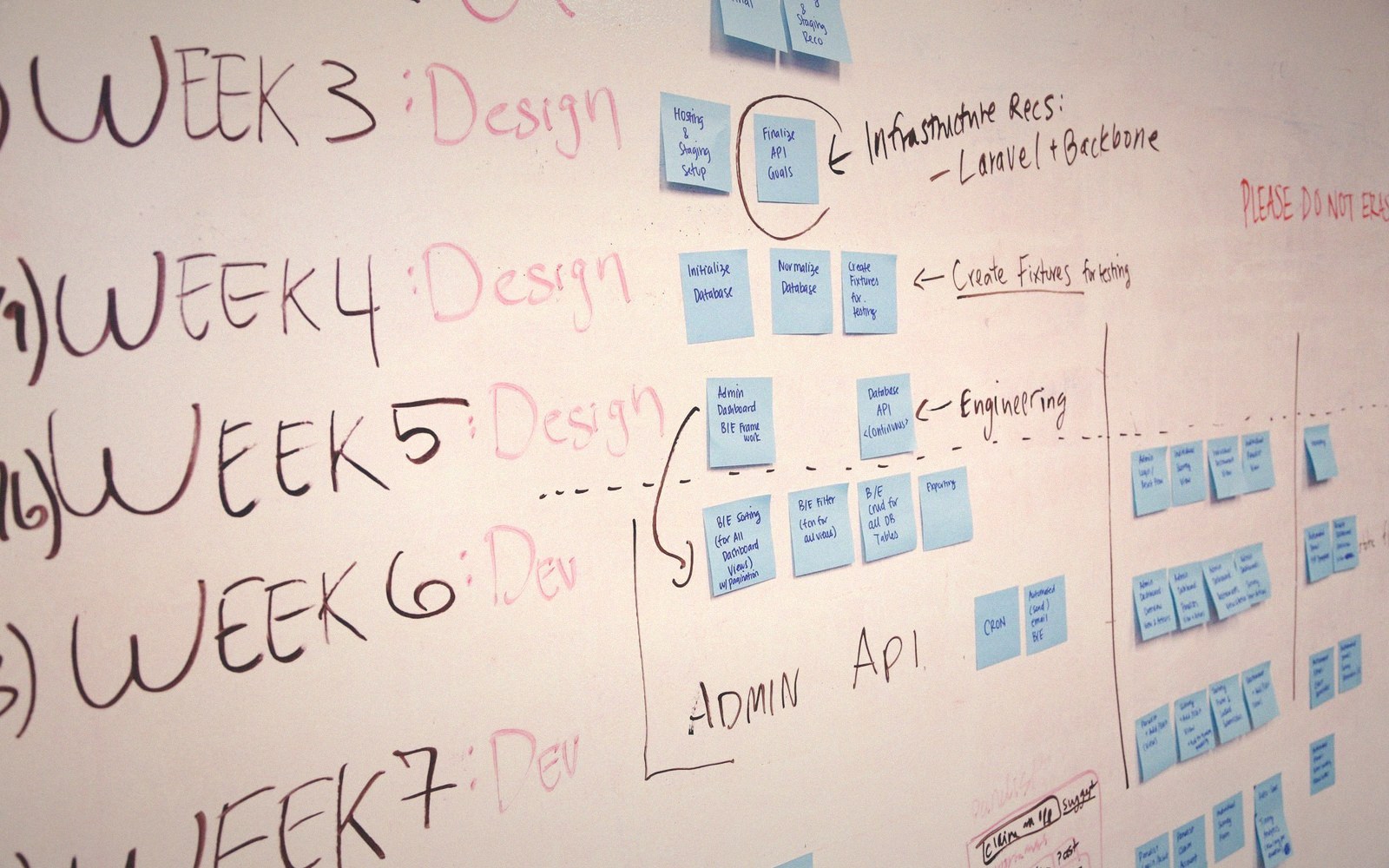
Planning furniture: useful for sequencing work, useless for predicting the last ten per cent.
Photo: Startup Stock Photos / Pexels
The practical lesson is about timing. At concept stage, every feature is droppable. Once it becomes the dependency that other dependencies depend on, it is no longer truly optional — only modifiable. Studios that track coupling between systems early, not just feature lists, are the ones that can still make a clean cut when they need to.
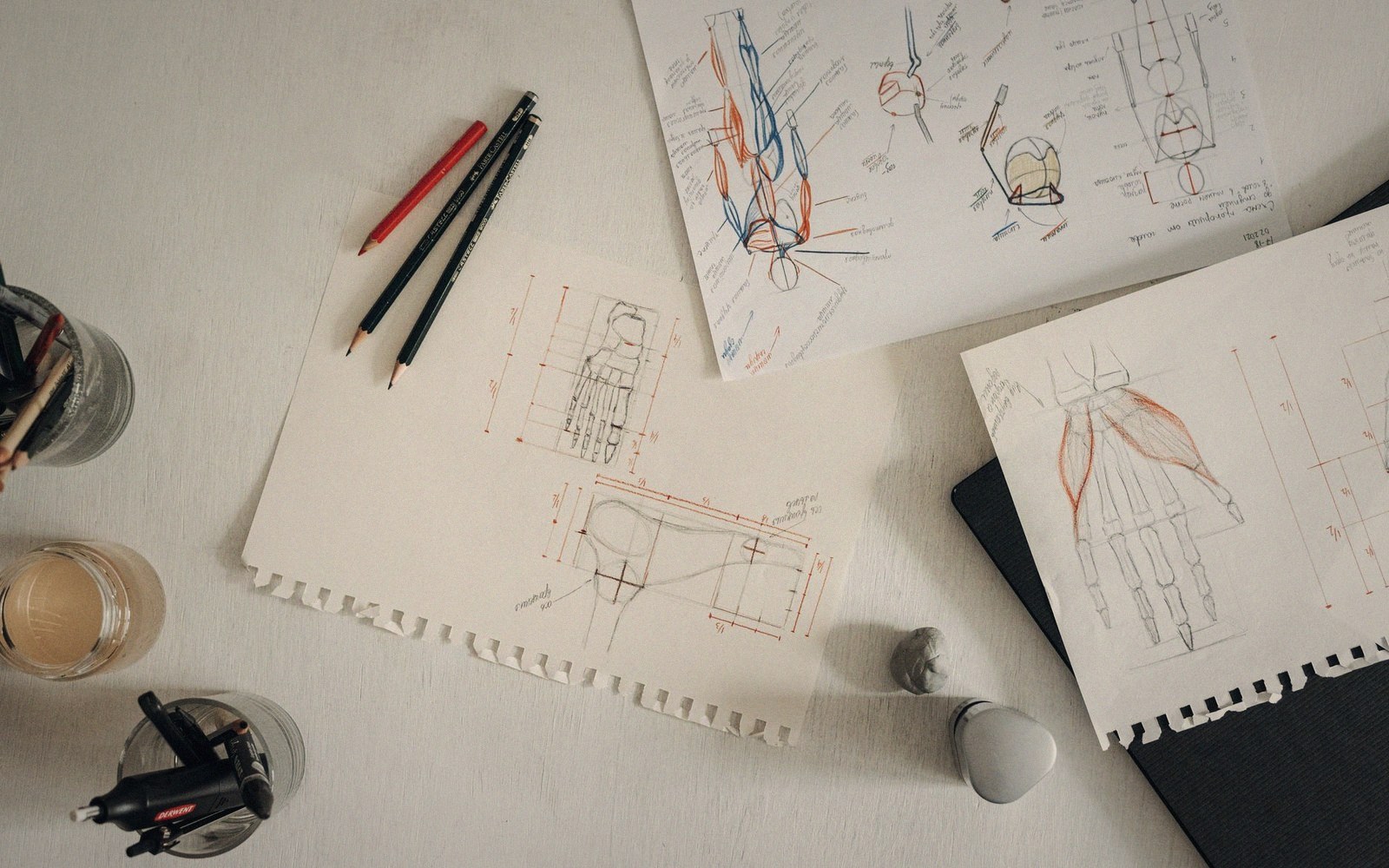
Plans are marked in pen because the argument moves faster than the tool does. Moving a wall on paper is free.
Photo: Anete Lusina / Pexels